


The double-R motif — two mirrored Rs stacked vertically, has been called ‘a belt buckle’, ‘a Year 5 crayon project’, and ‘something you'd find on a bottle of overpriced cologne’. It’s the same online critique narrative that every brand experiences when they make any significant degree of change. It is not comparable to Jaguar’s ‘lose your mind’ raging. Not quite. But given it is the same parent company (Indian owned Tata Motors operating under a subsidiary Jaguar Land Rover Limited), it might explain the strategy behind the more conservative approach.
Meanwhile, the brand strategists have largely nodded along, saying: 'the wordmark restoration is smart, the motif makes sense as a supporting asset, the portfolio logic is sound.'
Both reactions are incomplete.
The critics are reading the wrong thing. The strategists are being too kind. And the more interesting question — the one that nobody seems to be asking loudly enough, is whether Range Rover has confused going back to go forward with going back to stay safe, or, are they simply compensating for the 2025 Jag media pile on with a solution that’s digestible and familiar?
Let's give credit where it's due before we get into it.
JLR's 'House of Brands' strategy, splitting Jaguar, Land Rover, Defender, and Range Rover into distinct identities with their own visual language and emotional territory, is the right structural call. A parent company selling everything from utilitarian off-roaders to ultra-luxury SUVs cannot build genuine brand equity if everything shares the same strategic grammar. It’s confusing and made no sense at a consumer level. Separating the codes, and building each brand's equity independently, is how you avoid the slow bleed of portfolio confusion.
What Range Rover is attempting is the architecture of a fashion house: one parent (JLR), multiple premium identities, each with enough semiotic distance from the others to occupy a different luxury tier. Think Richemont or LVMH rather than a conventional automotive group. This is exactly the kind of work my business I personally thrive on, this kind of portfolio thinking where use our proprietary Edison BrandOrbit™ framework — understanding that perception is not a single thing but a system of codes, and that managing those codes deliberately across a portfolio is what separates brands that compound equity over time from those that erode it.
The structural intent is sound. The execution is where the questions start.

Before we get to the verdict, it's worth being precise about what we mean by brand codes. The term gets used loosely. Precision matters.
Jenni Romaniuk at the Ehrenberg-Bass Institute has done the most rigorous empirical work on this. In Building Distinctive Brand Assets (2018), she defines brand codes, or distinctive brand assets, as the non-name elements that trigger a brand into memory for category buyers. Colours, typography, shapes, patterns, characters, sonic cues. The test for whether an asset is genuinely distinctive is twofold: fame (how many buyers correctly link it to your brand) and uniqueness (whether they link it to you, and not also to your competitors). High fame, high uniqueness is what Romaniuk calls a 'use or lose' asset, the crown jewel of your brand system. Protect it, or lose it. Simple as that.
Dr Rachel Lawes brings the complementary lens. As one of the founders of commercial semiotics and author of Using Semiotics in Marketing, Lawes argues that codes are not just about recognition, they're about meaning. A semiotic code is a cluster of signs that regularly occur together to create a shared cultural understanding. These codes are normative: they tell consumers how to interpret what they're seeing, what world a brand belongs to, what it says about the person who buys it. A brand in the luxury category doesn't just need to be recognised. It needs to activate the right cultural codes so that consumers understand, instinctively and without being told, that it occupies a specific cultural world.
Romaniuk: measure and protect what already has fame and uniqueness. Lawes: make sure those assets carry the right cultural meaning — and know that meaning shifts as culture shifts. The Edison BrandOrbit™, a culmination of nearly 30 years in practice, sits at the intersection of both. We audit which codes exist, which carry real equity, which have cultural resonance, and which are doing neither job. Range Rover's rebrand, read through both lenses, tells a more complicated story than the headlines suggest.
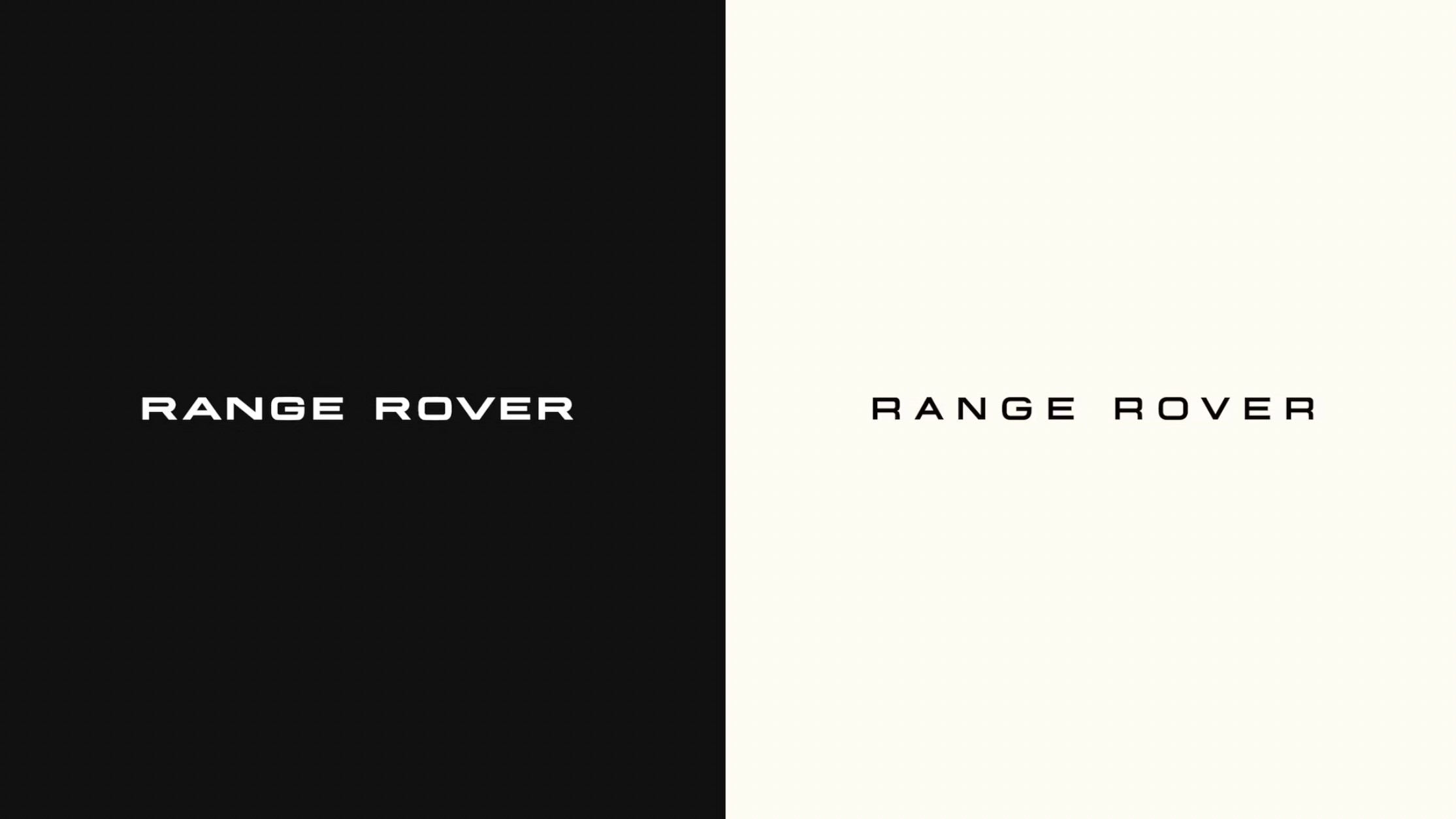
The wordmark revision is the strongest decision in this whole rebrand. Let's be clear about that.
Brand design chief Will Verity described the process as 'decoding and recoding Range Rover's existing DNA into a set of guidelines that support modern luxury communication.' The original 1970s mark was, in his words, 'bold, confident and quite elegant' — but with elements that had become awkward through decades of inconsistent custodianship. Every letter has been recrafted — not reimagined, recrafted — to revive the character of the original while sharpening it for contemporary use. This is a technique I have used countless times when working with legacy brands.
In Romaniuk's terms, this is correct. The Range Rover wordmark, spelled out in full, across the vehicle, for 55 years — is one of the highest-fame, highest-uniqueness assets in the automotive category. It sits firmly in the 'use or lose' quadrant. The strategic call wasn't to redesign it. It was to restore it: strip the accumulated drift, return to the source of its equity, and sharpen what was already there. Changing it radically would have been a gift to competitors. Abandoning it would have been brand vandalism.
This is the discipline we apply using the Edison BrandOrbit™: audit what already exists before you design anything new. Which codes are genuinely owned? Which have eroded through accumulated small decisions — a typeface tweak here, a colour shift there, a logo 'cleaned up' until it no longer carries the codes that made people trust it? Visual identity erodes quietly. Then someone wonders why the brand feels thin. Range Rover went back to the source, identified what was carrying real equity, and rebuilt from there. That is the harder discipline. That is what they got right.
Here's where it gets more complicated. And more interesting.
The double-R motif was always going to get a rough reception, that much was predictable. What's worth examining is whether the criticism is misdirected, or whether it's pointing at something real.
The case for the motif is straightforward. It's a supporting code — not a primary identifier, not a replacement for the wordmark, but a mark designed for the contexts where the full name doesn't fit: labels, embossed interiors, event spaces, digital profiles, repeat patterns on accessories. In Edison BrandOrbit™ terms: a primary code anchors recognition, a supporting code extends brand presence into spaces the primary code wasn't built for. You need both for a brand that wants to build a world rather than just a product.
And the logic of borrowing from fashion is not wrong in theory. Chanel’s double-C monogram. Louis Vuitton's monogram. Hermès' H. These marks work because they operate as semiotic surface, the texture of luxury that surrounds and reinforces the hero product. Dr Rachel Lawes would recognise this immediately: these are codes that signal cultural membership in a specific luxury world. They don't need to say the brand name because the cultural code system does that work for them.
The problem isn't the logic. The problem is that Range Rover has borrowed the same code system that every other luxury brand reaching for fashion-adjacency is currently using. And when everyone borrows the same codes, the codes stop being distinctive. They become wallpaper with a visible strategy.

This is the Romaniuk problem stated plainly, and it's the sharpest critique of this entire rebrand.
When codes are famous but not unique, when they signal 'luxury' to buyers without signalling 'this specific brand' — they don't build brand equity. They build category equity. And category equity benefits all your competitors equally.
Look at what's happening across luxury automotive right now. Bentley's rebrand. Rolls-Royce's evolution. BMW's digital logo. Lamborghini's identity refresh. Virtually every brand in the premium tier is reaching for the same archival vocabulary: monochrome, minimal, typographic restraint, heritage-coded patterns. These are what Lawes would call dominant codes, the established visual language that signals category membership. Playing dominant codes correctly tells consumers you belong in the luxury conversation. It does not tell them why you're different from everyone else in that conversation.
Romaniuk's Distinctive Assets Grid would classify these shared luxury codes in the 'avoid' quadrant: present in the market, legible to consumers, but functioning as category shorthand rather than owned brand territory. You can't build a 'use or lose' asset on the back of a code that twelve other brands are also deploying. The motif, the pattern, the monochrome palette, these feel like Range Rover borrowing fashion's language rather than developing its own.
The brands that will win the next decade of luxury automotive aren't the ones refining inherited codes. They're the ones courageous enough to define new ones. To invest in emergent, culturally-loaded signs they can own before competitors catch up. Range Rover, right now, is not doing that. It is doing the category standard, extremely well. Those are different things.
Did Range Rover get the art of recoding right? Partly.
The wordmark restoration: yes. Textbook. Going back to the source of genuine equity, stripping drift, sharpening what was already owned. This is what disciplined brand custodianship looks like, and it's rarer than it should be.
The motif and supporting identity system: not yet. The logic is sound. The execution is competent. But the codes are borrowed — and borrowed at a moment when the entire luxury category is borrowing from the same wardrobe. There is nothing here that Range Rover owns. There is nothing that, stripped of context, says 'this is Range Rover' rather than 'this is a luxury brand reaching for fashion adjacency.'
Going back to go forward only works if you come back with something that belongs to you. Range Rover has reclaimed its past with the wordmark. The harder work — building a code system that is distinctively, exclusively, unmistakably theirs — is still ahead.
The bones are right. The execution is measured. And the brand world they're trying to build will only matter when the codes inside it stop looking like everyone else's.

There is a counter-argument, and it touches on a point I made upfront.
Range Rover is operating in the shadow of Jaguar's rebrand, a moment that most likely rattled confidence in JLR's creative judgment. When your parent company's most visible brand decision has been publicly shredded from famous oligarch’s (dare I write his name) to the mainstream news, choosing the measured, credentialed path is strategically defensible. You don't introduce radical, emergent codes when the boardroom is still managing the fallout from a different brand's identity crisis. And only time will tell how that pans out for them.
Playing expected codes isn't always cowardice. Sometimes it's triage.
But triage has a time limit. The wordmark restoration — going back to go forward — is genuine strategic intelligence. The motif and pattern, on the other hand, feel more like going back to stay comfortable. The discipline of reclaiming what was yours is different from the risk-aversion of borrowing what everyone else is wearing. Range Rover has done the former with the wordmark. The latter is more visible in the supporting identity system.
The strategic question isn't whether this rebrand is well-executed. It is. The question is whether Range Rover has a plan, beyond this moment of category consolidation — to move from borrowed codes to owned ones. To build the kind of brand world where the double-R motif feels inevitable because it belongs to Range Rover specifically, not because it resembles something you've seen on a luxury tote bag.
Defining the distinction between codes that are genuinely owned and codes that are borrowed from the category is one of the most important, and most uncomfortable conversations we have with client partners. Uncomfortable because borrowed codes feel safe. They're what the category does. They pass the 'looks right' test in a presentation. They don't get challenged in a boardroom.
But the Edison BrandOrbit™ framework exists precisely to surface this problem: drawing on the evidence base behavioural science and distinctive asset research and the cultural rigour of semiotic analysis, we map which codes in a brand's system carry real fame and uniqueness, which carry meaningful cultural resonance, which have drifted, and which were never owned at all. The goal is to protect what's genuinely worth protecting, and to be honest about what still needs to be built.
Range Rover's recode is an act of custodianship in one register, and category conformity in another. The lesson for any brand watching this closely: going back to go forward is a powerful strategy. But only if what you bring forward is yours.
-
Written by Amber Bonney, Founder of The Edison Agency
Sources & Further Reading
Will Verity, Brand Design Chief, Range Rover — Design Week, July 2025
Jenni Romaniuk, Building Distinctive Brand Assets, Ehrenberg-Bass Institute / Oxford University Press, 2018
Dr Rachel Lawes, Using Semiotics in Marketing, Kogan Page, 2020
Creative Bloq — Range Rover rebrand analysis, July 2025
Drive.com.au — JLR badge redesign coverage
Motor1.com — Range Rover new logo analysis, July 2025


